
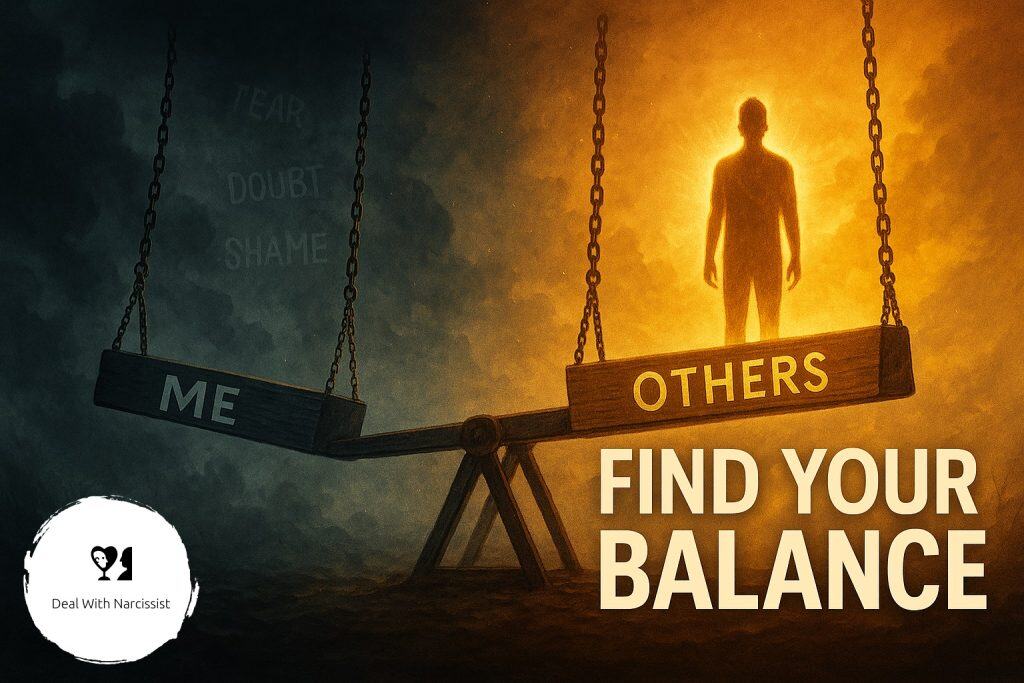
How to Rebuild Your Self Worth After Narcissistic Abuse
Healing your self worth after dealing with a narcissist can feel like trying to rebuild a house on broken ground. You may understand what happened, but feeling strong, grounded, and whole again is another story. Many people leave these relationships with deep doubt about who they are, what they deserve, and whether they are enough at all.
This article is here to help you rebuild that foundation.
We will look at why narcissistic behaviour can damage self worth, how to stop relying on external validation, and how to build a sense of value that comes from within. You will find practical steps and reflection exercises you can use in daily life, not just ideas to think about. These are tools that helped me personally and that many people in recovery recognize as powerful.
This is not about becoming confident overnight. This is about slow, steady changes that help you feel safe, respected, and at home in yourself again. When you start taking small steps in the right direction, you will slowly see things changing. You are allowed to heal at your own pace. Let’s start now.
Why Self Worth Matters After Narcissistic Abuse
Spending time in a relationship with a narcissist can slowly change the way you see yourself. Doubt can creep in through many small moments where your feelings are dismissed, your memory is questioned, or your needs are treated as an inconvenience. Over time, you may start to believe that you are the problem, or that your value depends on how well you support, soothe, or please the other person. This shift doesn’t usually happen all at once. It happens through constant pressure, emotional highs and lows, and a pattern where your sense of okayness becomes connected to someone else’s reactions.
Self worth is not about being confident or impressive. It is the quiet inner knowing that you matter, that your needs are valid, and that you deserve respect and kindness. When this foundation has been weakened, small decisions become harder. Setting boundaries feels risky. Walking away from harmful situations can feel impossible.
Many survivors stay focused on analyzing the narcissist’s behaviour because it feels like the only way to make sense of what happened. At a certain point, though, healing requires shifting that attention back to yourself and rebuilding the connection you have with your own value. This article focuses on that rebuilding process.
How Narcissistic Behaviour Affects Self Worth
A narcissist sadly pushes your energy and self worth in the wrong direction. Your negative thoughts and self-doubt will be emphasized. They often create a dynamic where your sense of worth slowly becomes tied to their approval. This can happen through criticism, subtle guilt, emotional distance, or comparing you to others. Even praise can be part of the cycle when it only appears as a reward for keeping them comfortable. When this happens, your sense of value becomes unstable because it is tied to how well you meet someone else’s expectations.
Over time, many survivors develop beliefs like:
- ”I am too much / not enough.”
- ”My feelings are a problem.”
- ”If someone is angry, it must be my fault.”
- ”I need to be perfect to deserve love.”
These beliefs feel personal, but they often come from an environment where your emotional needs were secondary to someone else’s control or self-image. Recovering self worth means naming these beliefs, noticing where they came from, and slowly replacing them with something more accurate and compassionate.
Why Rebuilding Self Worth is Not Selfish
When self worth is low, people often stay in unhealthy relationships because they assume they do not deserve more. They may cling to small moments of validation, ignore red flags, or stay out of fear of being alone. This is one reason narcissistic relationships can repeat across different partners: when you don’t feel grounded in your own value, you are more likely to accept patterns that feel familiar instead of patterns that are healthy.
Rebuilding self worth helps break that cycle. It is not about becoming self-centered or proving anything. It is about having a stable inner base that helps you protect yourself, make clearer decisions, and choose relationships that are mutual and safe.
This is why working on self worth is not selfish. It is protective. A stronger sense of worth:
- Makes it easier to set and keep boundaries
- Makes manipulative tactics easier to spot
- Helps you walk away sooner when something feels off
- Helps you choose kinder, more stable people
Rebuilding your self worth is not about being above anyone. It is about standing on equal ground.
Self Worth vs Ego and Why the Difference Matters
Seeing a narcissist up close can make the idea of valuing yourself feel dangerous. You may worry that if you start prioritizing your needs you will become selfish or cold. That fear makes sense if the only examples of “self worth” you have seen were actually ego.
In reality, there is an important difference:
- Ego and external validation: “I feel good only when others admire me, agree with me, or fear me.” It is unstable and depends on constant supply.
- Self worth: “I know I have value as a human being, even when I make mistakes, even when others do not like me.” It is quieter, more stable, and does not need a spotlight. It’s an inner sense of your value, being good enough and worthy of love.
Healthy self worth does not disconnect you from others. It helps you show up without fear, without pleasing, and without shrinking. It is a foundation that lets you relate to others as an equal, not as someone above or below them.
What Happens to Your Self Worth in a Manipulative Relationship
Self worth usually doesn’t collapse all at once. It shifts slowly through repeated experiences where your reality is denied, your feelings are minimized, or you are praised only when you fit a role that benefits the other person. In a relationship with a narcissist, worth often becomes something earned instead of something inherent. You may start adjusting yourself to avoid conflict, to keep the peace, or to stay close to moments of approval. At some point, you might not notice how much you have changed because survival becomes normal.
Many people describe feeling like they “lost themselves.” It often comes from learning that your needs are unsafe, your emotions are inconvenient, or your identity is negotiable depending on what the other person demands. Rebuilding self worth means reversing that process.
From Internal Worth to External Approval
A narcissist often gives attention in cycles. There may be moments where you feel seen or valued, followed by periods of withdrawal, criticism, or coldness.
Many people describe this as an emotional cycle where closeness, criticism, and distance repeat in predictable phases. If this pattern feels familiar, you can read more about it in my article on the narcissistic abuse cycle.
The contrast can make you attach deeply to the positive moments and work harder to avoid the negative ones. Before you realize it, your sense of worth can start depending on how the other person feels that day. This doesn’t mean you are weak. It means you adapted to a confusing environment. Most people would.
The problem is that this teaches your nervous system that value is unstable and earned. When you leave the relationship, you may still carry that pattern into new relationships, friendships, or even work. You might depend on others to tell you who you are, or blame yourself when someone is upset, even when you did nothing wrong. That pattern is learned, not permanent.
The Cost of Staying Small to Stay Safe
People often become smaller in these relationships. They speak less, express less, and ask for less because it feels safer. When this happens over time, it changes the way you relate to yourself. You may start believing you are “easy to replace,” “too sensitive,” or “a burden.” These are not true statements. They are conclusions drawn from an environment that did not make space for you.
When you start healing, part of the work is letting yourself take up space again. That can feel uncomfortable, especially if your body learned to associate safety with silence or compliance. Feeling uncomfortable during this phase is normal. It doesn’t mean you are doing something wrong. It means you are growing back into yourself. You get in touch with yourself again, with the part of you that is full of joy, love, and compassion.
When Worth Becomes Tied to Performance
Some survivors describe a phase where they became the “perfect partner” to avoid conflict. They became helpful, forgiving, understanding, patient, and supportive. These traits are not a problem by themselves, but if they replace your sense of self, you may start to feel worthy only when you are useful or selfless.
That is not self worth. It is self-sacrifice. Healthy worth includes moments where you say no, need rest, or disappoint someone without believing that makes you unlovable. This dynamic is not just emotional. It is part of a larger pattern where control is created through attention, withdrawal, and dependency. If you want a deeper look at how that pattern works, you can read my article on the web of control.
A Closer Look at Identity Loss
Losing yourself often shows up in small ways before you notice the bigger ones. Your music taste changes. Your opinions soften. You stop talking about your interests. You apologize more. Over time you may not know what you want, or you might feel uncomfortable answering basic questions honestly.
Identity loss is not just something emotional. It can become practical: you forget what excites you, what your boundaries are, and what a normal level of respect feels like. Healing means rediscovering those things, not inventing a new identity from scratch.
How to Start Rebuilding Your Self Worth
Rebuilding self worth after a manipulative relationship starts with repairing the connection between you and yourself. When you have spent a long time adapting to someone else’s needs, it can feel unfamiliar to even ask what you want or how you feel. So this process begins with awareness, not perfection.
The goal is not to become confident overnight. The goal is to slowly feel safe in your own mind and body again. This section introduces the main principles that prepare you for practical habits later in the article.
Start by Noticing How You Speak to Yourself
Many survivors continue using the same tone with themselves that the narcissist used with them. That voice might sound logical or responsible, but often it is critical, harsh, or perfectionistic. You may talk to yourself in a way you would never talk to someone you love.
You do not have to instantly replace these thoughts with positive ones. It is enough to start noticing when your inner voice reflects old conditioning rather than your current reality. This step sounds simple, but it is usually the most important shift. Awareness creates choice.
Separate Your Value From What You Do
After abuse, people often attach their worth to performance: being supportive, strong, forgiving, productive, calm, attractive, or useful. This can feel stable, because you can work harder to feel worthy. The problem is that worth built on achievement collapses the moment you rest, fail, or disappoint someone.
You do not lose value when you stop performing. You only lose the illusion that your value depends on performance. True self worth is about being, not proving. You don’t need to ‘do’ anything to be enough. You are enough by being. You are a human being, not a human doing! 🙂
Let Your Needs Exist Again
If you spent years keeping the peace, you may not know what you need anymore. Needs might feel selfish or unsafe. This is where healing gets confusing, because reclaiming needs often feels wrong before it feels right.
Start small. Not everything has to become a boundary or a confrontation. Sometimes rebuilding starts by admitting simple truths to yourself: I need more rest. I want space. I feel lonely. I need help. I don’t want to explain myself again.
Your needs are not a problem. They are part of you.
Reconnect With Your Inner Signals
Surviving a narcissistic relationship often teaches your body to ignore discomfort. You may notice something feels off, but override it to avoid conflict. Rebuilding self worth requires paying attention to those signals again. Your feelings, doubts, and physical reactions hold information. They help you recognize what matters to you.
This often shows up as a quiet tension in the chest, a small wave of irritation, a sense of distance, or a sudden desire to shut down. Instead of pushing it away, try asking: What is this feeling trying to tell me about what matters to me?
You do not have to act on every feeling. Just listen.
Work Towards Equality, Not Superiority
Some people, after leaving a narcissist, swing to the other side. They become defensive, closed off, or overly strict to protect themselves. That response makes sense in the short term, especially after being controlled or belittled. But long-term healing is not about becoming the opposite of the narcissist. It is about seeing yourself and others as equal.
You don’t need to put yourself above others to feel safe. You only need to stop putting yourself below them.
Practical Ways to Rebuild Your Self Worth
Rebuilding self worth is not a single skill. It is a combination of habits, mindset shifts, and emotional practices that help you return to yourself. These steps are not quick fixes and they are not about becoming confident all the time. They are about creating a healthier inner relationship so you no longer depend on approval, performance, or fear to feel like you deserve space.
Below are practical steps that help rebuild worth from the inside out. Each one comes with a reflection or a small action you can try in daily life.
1. Stop Comparing Yourself to Others
Comparison often becomes a way to measure whether you are allowed to feel good about yourself. After narcissistic manipulation, this can get stronger because your worth may have been tied to how well you performed, reacted, looked, or behaved compared to other people. The problem with comparison is that it never ends. You can always find someone who does something better. When worth depends on being above average, you will always feel like you need to earn your place.
It’s not healthy to base your self worth upon others or reasons outside yourself. It’s about your inherent worth as a person and not about what you do or achieve. What you do is not who you are. You are valuable for who you are. Instead of asking “How do I rank?” try asking “What matters to me?” That shift moves you from performance to identity.
Reflection: When you catch yourself comparing, pause and ask: Why did this trigger me? What value or insecurity is underneath?
Even that awareness is progress.
2. Make Your Worth Unconditional Again
When self worth depends on being pleasing, perfect, needed, admired, forgiving, or strong, it stops being self worth and becomes a contract. Many survivors internalize conditions like:
- I am worthy when I don’t upset anyone
- I am worthy when I help everyone
- I am worthy when I succeed
- I am worthy when someone loves me
These beliefs might feel practical, but they make worth fragile. If someone pulls away, criticizes you, or ignores you, your worth collapses with them. You are not here to earn existence. You already exist.
Reflection: Ask yourself whether your self worth and love to yourself is conditional or unconditional. Write down one place where you feel your worth is conditional. Then rewrite it in a simple unconditional form, like:
- “I deserve care even when I’m struggling.”
- “I can make mistakes and still deserve kindness.”
- “I have value even when no one sees it.”
Unconditional worth is something you grow into, not something you declare once.
3. Quiet the Inner Dialogue That Attacks You
When you have or had a narcissist in your life, you can have increased self-doubts, feelings of shame, and negative thoughts and emotions. Survivors often continue the narcissist’s voice in their own minds long after the relationship ends. You may speak to yourself with criticism, shame, pressure, or impatience. You may judge your emotions as weaknesses or treat fear like failure.
What I share next has a slightly more spiritual angle. If that’s not your thing, feel free to just take what resonates and leave the rest. Now, if you think thoughts such as ‘I cannot live with myself’, think about what this thought is. It means there is an ‘I’ and a ‘self’ which seem not to be able to live with each other. Which one of them is real? Your true nature is the ever-present I am. It’s consciousness. You have this true state, which means the truth is within you. You might just not feel it because of all the noise your mind makes.
Eckhart Tolle says ‘love, joy, and peace are deep states of being and cannot flourish until you have freed yourself from mind dominance‘. The present moment is all you ever have.
You don’t need to replace negative thoughts with forced positive ones. Start by noticing the tone. Ask yourself: Would I speak to a friend like this? If not, the goal is simple: shift from judgment to honesty. You can still hold yourself accountable, but you can do it with respect.
Small practice: The next time a wave of self-criticism shows up, try saying internally: “I hear that. I want to speak to myself with more care.” Even naming the intention breaks the old pattern.
4. Practice Gratitude Without Avoiding Pain
Many people hear “practice gratitude” and assume it means pretending everything is fine. Gratitude is not about forcing positivity. It is about training the mind to notice sources of safety, meaning, progress, and connection. After years focused on threats, conflict, or emotional control, your attention may default to danger.
What you focus on grows, and what you ignore fades. Instead of listing achievements or forced affirmations, focus on small, honest things that make life feel a little more livable: a warm shower, a calm moment, a supportive text, a decision you didn’t overthink. This helps your nervous system stop expecting everything to fall apart.
Gratitude gently shifts focus without denying pain. When you feel gratitude, you can’t feel fear or worry at the same time. It’s a very powerful state that is within you, and you can strengthen it through regular practice.
Small practice: Start the day with this priming exercise from Tony Robbins and see whether it supports you. I do this every morning myself.
Reflection: At the end of the day, write down two things that felt good and one thing you handled with care or strength. It can be tiny. The brain learns from repetition.
5. Practice Self Compassion Instead of Self Judgment
Self compassion is often misunderstood as weakness or self-pity. In reality, it is the skill of treating yourself with the same kindness you offer others. Research shows self compassion can be more stable than self esteem because it holds you with care even when you fail.
This matters because many survivors push themselves to be strong, forgiving, patient, and understanding, but direct none of those qualities inward. They carry pain without support from themselves, and that makes healing harder. You deserve your own compassion and kindness. Take responsibility for how you experience life, but you do not need to be judgmental about it to yourself. Acknowledge and pay attention to your suffering; respond to this suffering with kindness and care.
Self compassion is not saying everything is fine. It is saying, “This hurts and I still deserve care.”
A simple exercise: When you notice emotional pain, pause, breathe, and place your hand on your chest (or anywhere that feels grounding). Then say: “I am struggling. This matters. I am here for myself.” This is the opposite of abandoning yourself.
6. Align Your Actions With Your Values
If your worth was shaped around serving someone else’s needs, it helps to rebuild identity through your own values. This means deciding what kind of person you want to be and acting on it, even in small ways. Values might include honesty, clarity, kindness, fairness, directness, rest, or independence.
When your actions match your values, confidence grows naturally. You are no longer performing to earn worth. You are expressing who you are.
Reflection: Choose one value that matters to you right now. Then ask: “What is one small action today that aligns with this?”
This builds self worth through consistency, not approval. Confidence follows from taking actions, not the other way around.
Common Traps While Rebuilding Self Worth
Healing self worth after narcissistic abuse can feel empowering, but it can also bring confusion. Sometimes the first efforts to feel stronger are actually protective reactions rather than real restoration. That is normal. When you have lived in survival mode, your nervous system may still be looking for ways to avoid pain instead of building a stable inner foundation.
The goal of this section is not to judge these reactions, but to help you notice when you might be rebuilding from fear rather than from self respect.
Mistaking Defensiveness for Strength
After feeling small or controlled for a long time, it is common to swing to the opposite side. You may feel the need to protect yourself by pulling away from people quickly, shutting down emotions, or assuming others will hurt you. At first this can feel like strength, because it creates distance from anything that feels threatening.
The problem is that defensiveness does not rebuild worth. It only shields wounds that still feel raw. Real strength grows when you can stay connected to your needs and feelings without collapsing or attacking. It is a quieter confidence that does not require walls. You are allowed to be cautious while you heal, but notice when caution becomes isolation.
Using Self Improvement to Avoid Feeling
A lot of survivors throw themselves into personal development as a way to feel in control again. There is nothing wrong with growth, but it can become a way to escape pain if every moment of discomfort turns into a task or a goal. When healing becomes a performance, self worth starts depending on progress.
You do not have to prove your healing to anyone. Sometimes the most healing moment is to sit with what hurts instead of trying to fix it.
Replacing People Pleasing With Emotional Distance
If you spent years keeping the peace, learning boundaries can feel liberating. But boundaries are not the same as pushing people away. People sometimes move from “I always say yes” to “I don’t need anyone,” because connection feels dangerous. Both extremes come from fear.
Healthy boundaries allow closeness while protecting your well-being. They let you choose who enters your life, not shut everyone out. You can have needs and still be independent. You can ask for help without losing yourself.
Confusing Anger With Empowerment
Anger can be a necessary and honest stage of healing. It helps you recognize mistreatment and reclaim the space you lost. But it is not the final step. If anger becomes your identity, you may stay stuck in a world defined by the narcissist, just in opposition to them. Your story becomes about resistance instead of growth.
Empowerment is not about fighting someone else. It is about choosing your own life again. Anger can open the door. It does not have to be the room you live in.
Trying to Heal by ”Becoming the Opposite”
Some people try to rebuild worth by becoming everything the narcissist said they were not: more confident, more successful, more attractive, more impressive. That urge is understandable, but it can keep your worth tied to the narcissist’s narrative. It keeps your healing reactive instead of authentic.
You don’t need to become the opposite of them. You need to become more yourself. Self worth grows when your identity is shaped by your values, not by someone else’s wounds.
Staying Grounded While Rebuilding Self Worth
Rebuilding self worth is not a straight line. Some days you may feel clear and strong, and then something small can trigger old patterns. A comment, a reminder from the past, a stressed day, or even a moment of closeness in a new relationship can bring back old fears. This does not mean you are failing. It means your body is still learning safety.
Long-term healing is about building steady habits that support you even when your emotions shift. It is about living in alignment with your values instead of reacting from old wounds.
Expect Setbacks Without Losing Trust in Yourself
Setbacks often feel like proof that nothing has changed. You might catch yourself thinking, “Why am I still struggling with this?” Healing becomes easier when you understand setbacks as part of the process, not the opposite of progress. Patterns built over years take time to unwind. What matters is how you respond to those moments.
Instead of asking “Why am I back here?” try asking “What is this moment teaching me about what I still need?”
This keeps setbacks from becoming shame and turns them into guidance.
Stay Connected to Your Values, Not Your Fears
When life becomes stressful, it is easy to slip into old coping styles like pleasing, shutting down, overexplaining, or trying to control outcomes. In those moments, fear leads. Part of long-term healing is noticing when fear is steering the wheel and gently returning to your values.
Values give you a stable direction even when emotions are loud. They remind you why you are choosing a new way of living, not just what you are avoiding. If you need a simple anchor, ask: What choice here respects me?
Let Relationships Become a Space for Growth Again
After being hurt, it can feel safer to keep a distance from people. But healing self worth eventually involves testing your new boundaries and identity in connection with others. You do not have to rush into deep relationships, but you also don’t need to heal in isolation forever.
Healthy relationships don’t replace your worth. They support it.
Pay attention to how you feel around people. Notice who you soften around, who drains you, and who helps you stay connected to yourself. These signals help you choose relationships that match the person you are becoming, not the person you had to be.
Let Small Progress Count
When you are used to emotional chaos or big breakthroughs, slow progress can feel invisible. Healing often looks like small shifts that seem unimportant at first:
- saying no without apologizing
- resting without guilt
- not explaining every emotion
- asking for what you want
- stopping a conversation when it crosses a line
These moments are evidence that your relationship with yourself is changing. They matter because they add up. Sometimes growth looks boring. That is not weakness. It is stability.
Keep Reconnecting With Who You Are
Losing yourself can happen gradually, and finding yourself again is also gradual. Identity after abuse is not about redefining everything. It is about noticing what feels true, what energizes you, and what feels like your voice instead of a survival strategy.
You might rediscover hobbies, values, dreams, and preferences you pushed aside. You might realize you enjoy things you never had space for. You might feel different in friendships, work, or daily choices. Healing is not about rebuilding the old version of you. It is about making space for the version that finally feels real.
When Healing Feels Overwhelming
Some phases of rebuilding self worth can feel heavier than the relationship itself. Once you leave survival mode, emotions you pushed aside may surface all at once: anger, sadness, regret, confusion, loneliness, fear, or numbness. That doesn’t mean you are going backwards. It often means your body finally feels safe enough to process what happened. The collapse after leaving is not a failure. It is often the beginning of real healing.
Healing becomes overwhelming when you try to do it alone, rush through the process, or expect clarity before you allow yourself to feel. You don’t need to solve everything at once. Sometimes the most grounded choice is to slow down.
When to Seek Extra Support
Not everyone needs therapy. Some people heal through reflection, community, learning, time, and new healthy connections. But extra support can help when the weight becomes too heavy to hold alone or when old patterns keep returning in a way that stops you from moving forward.
You might consider support if you notice one of these:
- You feel stuck in self-blame or shame that doesn’t soften with time
- You leave the relationship but still feel controlled internally
- Your identity feels empty or unclear, not just hurt
- You cannot trust your decisions even in simple situations
- Flashbacks, anxiety, panic, or hypervigilance make daily life harder
- You isolate because connection feels unsafe, not because you want space
- You recognize patterns repeating in new relationships
Seeking help is not a sign that you are broken. It is a sign that your pain deserves support.
What Kind of Help Can Be Useful
People often think “therapy” is one thing, but different approaches help in different ways. What you choose depends on what feels right to you.
- Talk therapy can help untangle beliefs shaped by manipulation
- Trauma-focused methods can support your nervous system instead of only your thoughts
- Self-compassion or mindfulness approaches can help rebuild inner safety
- Support groups or communities can reduce isolation and bring validation
- Coaching can help with rebuilding identity or life direction
No single approach fits everyone. You are allowed to choose support that meets you where you are, not where someone else thinks you should be.
What to Do When You Feel Lost
Feeling lost is not a sign you’re failing. It often means you’re between identities: no longer the person shaped by the narcissist, but not yet fully connected to who you’re becoming. This space feels uncomfortable because there’s less structure, fewer old rules, and more room to choose.
When you feel lost, try grounding yourself in simple questions:
- What matters to me today?
- What am I tired of carrying?
- What would support me right now instead of drain me?
- What truth am I finally ready to say?
You don’t need to have answers every time. Showing up with curiosity is already progress.
Frequently Asked Questions About Self Worth After Narcissistic Abuse
1. Is self worth the same as confidence?
Not really. Confidence is about what you can do. Self worth is about knowing you have value even when you fail, rest, or struggle. Confidence can grow and shrink depending on the situation. Self worth stays with you regardless of performance.
2. Can self worth come back while I’m still in contact with the narcissist?
It is possible to work on yourself anywhere, but rebuilding worth is harder when the same dynamics continue. If you cannot go no contact, focus on emotional distance, boundaries, and building support outside the relationship so your worth is not shaped by that dynamic alone. For some people in the transition phase, tools like the grey rock method can help reduce emotional reactions while you create space to think clearly. But this is a short-term strategy. It is not enough on its own to rebuild identity or restore worth.
3. Why do I still feel worthless even though I understand what happened?
Understanding is a mental step. Worth is emotional and often stored in the body. After manipulation, the nervous system may still expect danger or rejection. Healing happens through small lived experiences where you treat yourself with respect, not just through insight.
4. What if I keep attracting similar people?
Patterns often repeat until the part of you that accepted them starts healing. When self worth strengthens, your boundaries change, your tolerance for manipulation drops, and the people you choose (and keep) shift naturally. This is not a character flaw. It is a stage of healing.
5. How do I know if I’m truly healing and not just coping?
Healing feels less like becoming fearless and more like being able to stay present with your needs without shutting down or pleasing to stay safe. A good sign is when you act from your values instead of reacting from fear.
Closing Thoughts
Rebuilding self worth after narcissistic abuse is not about becoming a stronger version of who you were before. It is about reconnecting with the parts of you that were silenced, doubted, or dismissed. You are not trying to prove anything anymore. You are learning to live from a place where you know you matter.
There will be moments when you feel clear and steady, and moments where old patterns return. Both are part of the process. Healing is not a test you pass. It is a relationship you build with yourself over time. You deserve care, even when you feel confused. You deserve respect, even when you feel unsure. You deserve gentleness, even on days you feel broken. Worth is not something you earn. It is something you uncover.
Take your time and focus on small steps. You do not have to rush. Growing back into yourself is enough. Any small step in the right direction will be helpful. You can’t change your destination right away, but you can change your direction. If you consistently keep taking these small steps, it will have a large impact.
If You Want Support on This Path
I hope my article is helpful to you, it’s written with kindness and compassion. If you want more guidance or tools while working through this phase of healing, you can explore my Healing & Resources page. It includes links to therapy options, a free e-book, meditation app suggestion, and other supportive tools that might help you continue at your own pace.
I also wrote an in-depth e-book for people who want more structure in recognizing patterns and rebuilding their sense of self after manipulation. If that feels relevant to where you are now, you can read more about it here: Recognition Code for Narcissism.