The Empath–Narcissist Relationship: Why the Attraction Feels So Deep (And So Draining)
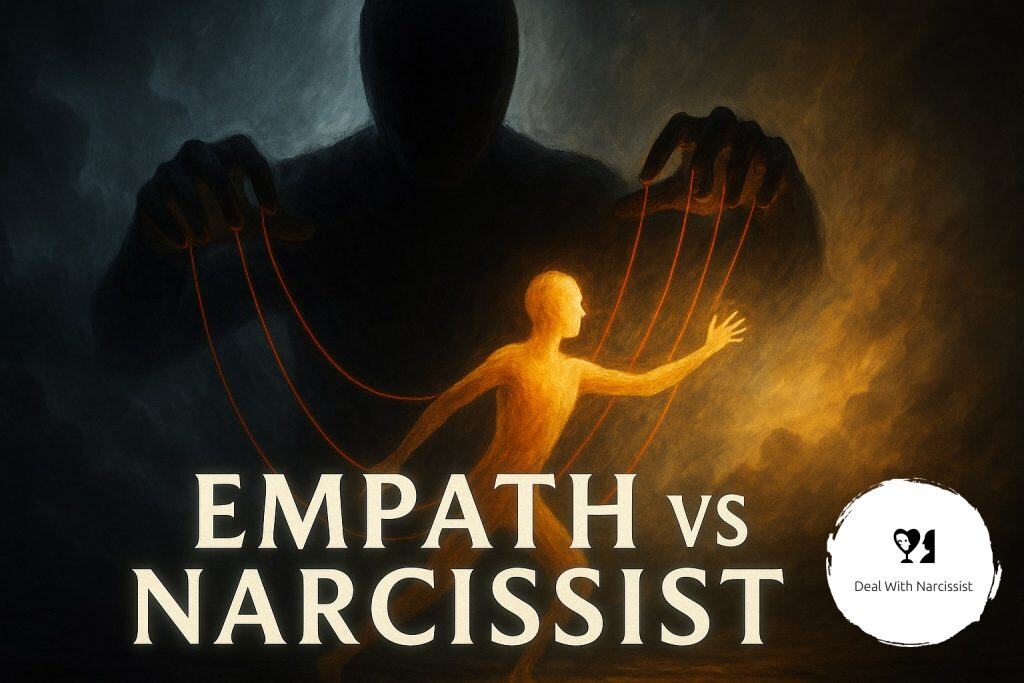
If you are an empath, you might be drawn to people very intensely. You feel deeply, you notice small shifts in others, and you often see potential where other people only see behaviour. When that sensitivity meets a narcissist, the connection can feel powerful, fated, or even spiritual at first.
Over time, though, the same empath narcissist relationship can slowly drain your self worth, your energy, and your sense of reality. You might find yourself endlessly trying to understand them, fix them, or love them into healing, while you become smaller and more exhausted.
In this article I want to walk through the dynamics between empaths and narcissists in a grounded way. I’ll explain why the attraction is so strong, how the relationship usually turns toxic, and what it can look like in real life. I’ll also share parts of my own story. My parents’ relationship carried this dynamic too. My mother was the empath, and my father often showed behaviour that matched the narcissistic side of this pattern. Watching that relationship up close shaped a lot of what I write and talk about now.
As always, I focus on behaviour, not labels. I can’t diagnose anyone. When I use the word “narcissist” here, I’m talking about repeated patterns of behaviour that are manipulative, self centered, and emotionally immature, not about someone’s worth as a human being.
My hope is that this guide helps you recognize patterns, feel less alone, and gently turn some of your attention back to yourself, your needs, and your healing.
What I Mean by “Empath” and “Narcissist” Here
There are many definitions of empaths and narcissists. I use simple ones here, based on behaviour and lived impact.
When I say empath, I mean someone who:
- Feels emotions deeply and picks up on the moods of others very quickly.
- Can easily imagine how others feel and often cares a lot about their pain.
- Tends to put other people’s needs first, especially when boundaries are weak.
- Has a strong wish to help, heal, or support people they care about.
When I say narcissist, I mean someone who:
- Has a strong need for attention, admiration, and control.
- Lacks real empathy in day to day behaviour, even if they can say the right words.
- Protects their ego at all costs and rarely takes real responsibility.
- Uses manipulation, blame, or emotional pressure to get what they want.
Empaths and narcissists are not exact opposites, but in some ways they fit together like puzzle pieces. One gives, the other takes. One looks inward and feels too much, the other looks outward and feels too little. That “fit” is exactly what makes the dynamic so intense and so dangerous if there are no strong boundaries.
Why Empaths and Narcissists Are Drawn to Each Other
The pull between an empath and a narcissist is rarely random. There are patterns in how this attraction starts and grows. I’ll walk through three common ones. They often overlap in real life.
1. The Lovely Fake Persona That Hooks the Empath
In the beginning, the narcissist doesn’t show you chaos. They show you a carefully crafted version of themselves. They can be charming, funny, generous, emotionally intense, and very attentive. They might remember small details, send long messages, or tell you how special you are. This early phase is often called love bombing.
If you’re an empath, this can feel like finally being seen. Someone is mirroring your depth, your values, your sensitivity. They might talk about their pain or childhood in a way that makes you feel like you’ve been invited into their “inner world.” It can feel like you’ve met a wounded soulmate.
The problem is that this persona doesn’t last. Once you don’t give full attention, control, or agreement anymore, the switch flips. The same person who once called you their soulmate can suddenly become cold, critical, distant, or cruel. They may use gaslighting, blame, silent treatments, or subtle put downs.
For the empath, this change is very confusing. You’ve already bonded with the early version of them. You keep trying to get that version back, even when their day to day behaviour is showing you something very different.
2. Opposites That Fit For the Wrong Reasons
You’ve probably heard the saying “opposites attract.” Sometimes differences are healthy. They make a relationship interesting and balanced. In the empath–narcissist dynamic, however, the “fit” often serves the narcissist’s needs, not the health of the relationship.
A narcissist:
- Needs attention, admiration, and validation.
- Likes being the center of the story.
- Doesn’t naturally tune into other people’s emotional worlds.
An empath:
- Feels a strong drive to care, understand, and soothe.
- Is used to putting their own needs second.
- Can easily adjust themselves to what the other person needs.
For the narcissist, this is ideal. They get a partner who listens, understands, forgives, and bends. For the empath, the early feeling of being “needed” can feel meaningful. They might feel like they’ve finally found someone who truly needs their depth, patience, and emotional strength.
What’s attractive to the narcissist is everything they don’t have themselves: your empathy, your ability to connect deeply, your friendships, your inner richness. They might want to possess it, stand in the glow of it, or quietly ruin it so no one else can have it.
3. The Emotional Intensity: “I Can Heal Their Wounded Inner Self”
The third reason is more subtle and, in my view, the most dangerous in the long term. It’s the attraction to the narcissist’s emotional intensity. Narcissists can be intense people. Their emotions often seem big, dramatic, or deep. They might talk about their pain in a powerful way, share dramatic stories about betrayal, or show strong reactions to small things. This intensity can feel like depth, especially if you’re used to numb or distant people.
As an empath, you might sense that beneath their ego and harsh behaviour there is a wounded, frightened inner child. You might think, “If I love them enough, if I stay, if I understand them better, they’ll finally feel safe and soften. Then the real person will appear.”
Meanwhile, the narcissist is doing something very different. They are mapping your inner world. They are excited to explore your loyalty, your wounds, your triggers, and your patterns. They are learning how far they can go, how much you’ll forgive, and what stories will keep you attached.
Your intuition often notices something is off very early. You might ignore that gut feeling and later remember those first small doubts very clearly. Looking back, many empaths can point to a quiet moment where their body already knew this wasn’t safe, even while their mind and heart were still hoping.
7 Unhealthy Dynamics in the Empath–Narcissist Relationship
Every relationship is unique, but certain patterns show up again and again when an empath is involved with a narcissist. I’ll walk through seven of them. You might recognize some more strongly than others.
1. Giving vs. Taking
Empaths are natural givers. Narcissists are natural takers. This is the basic fuel of the dynamic.
The empath brings compassion, listening, understanding, and a willingness to go the extra mile. The narcissist brings a constant hunger for attention, reassurance, and validation. At first, this can feel like a match. The empath feels useful and needed. The narcissist feels admired.
Over time, the balance gets more and more distorted. The narcissist expects worship. The empath gives more, explains more, apologizes more, and receives less. The relationship becomes a one way stream of energy. The empath’s self worth slowly erodes.
2. Harmony vs. Chaos
Most empaths value peace, honesty, and emotional safety. They want to talk things through, find common ground, and build a stable connection. A narcissist, however, often thrives in drama and chaos. They like to be in control of the emotional climate. They may:
- Switch quickly between warmth and coldness.
- Use conflict to regain control when you get “too independent.”
- Reward behaviour that serves them and punish behaviour that doesn’t.
This creates a reward system. When you act how they want, you’re flooded with praise, affection, or attention. When you set a boundary, express a need, or disagree, you get distance, criticism, or rage. There is no stable middle. Your nervous system is constantly trying to prevent the next storm.
3. Boundaries Slowly Fade
Empaths often forgive quickly and try to understand why someone behaved the way they did. Narcissists use this.
At first, you might have clear lines: “If my partner lies to me, that’s not okay.” When it happens, though, they explain it away, cry, or talk about their trauma. You understand. You forgive. You give another chance. The line moves a little.
Over time, small red flags become “complicated situations.” Things you once saw as unacceptable become “understandable, given their past.” Your boundaries don’t collapse in one day. They are slowly pushed, tested, and blurred. You end up tolerating behaviour you never thought you would accept.
4. The Empath Tries to Fix the Narcissist
Once an empath clearly sees that something is wrong, their first impulse is often to help. They don’t want to give up on someone. They want to heal the wound, not just walk away from it. You might believe:
- “They just need someone to really understand them.”
- “If I love them enough, they’ll finally feel safe and change.”
- “Maybe I’m the first person who truly sees their pain.”
It’s very hard for many empaths to fully accept that some people don’t want to change and don’t want a mutual, honest relationship. The idea that someone can lack empathy in a deep, stable way goes against how you see the world.
You may keep seeing the “wounded inner child” behind their behaviour and ignore the harm they keep doing in the present. This keeps you tied to their potential instead of their reality.
5. Both Start Working on the Needs of the “Wounded” Narcissist
This fixing dynamic can go even further. The relationship starts to revolve fully around the narcissist’s wounds, moods, and needs.
The narcissist:
- Positions themselves as deeply broken, misunderstood, or “damaged.”
- Talks about wanting to change, wanting to be better, wanting to heal.
- Says things like “I’m not perfect, but I’m trying” or “With you, I can finally become who I really am.”
The empath:
- Feels responsible for supporting this healing journey.
- Stays through repeated harmful behaviour because “trauma is complicated.”
- Puts their own pain aside because “they’ve suffered so much already.”
In theory it sounds like a couple working together on growth. In reality, only one person is doing the work and paying the price. The narcissist’s promises rarely translate into stable change. They might behave better for a short time, then slide back the moment they feel safe that you won’t leave.
In my own family, my father could talk about how committed he was to the marriage and how ashamed he was of his behaviour, then go to his mistress the same evening. He seemed to fully believe his own words in the moment. That made it even more confusing and convincing.
6. Blind Faith in Good Intentions
Empaths often have a strong belief in good intentions. You want to believe that, deep down, people mean well. Narcissists use this too. The more you believe in their “good intentions,” the more you explain away their behaviour. You tell yourself:
- “They didn’t mean it like that.”
- “It’s their trauma talking.”
- “They’re trying, I should be patient.”
Your intuition might be screaming that this is not safe. Your body might be tense all the time. Still, your mind keeps coming up with reasons why you should stay. This blind spot can keep you in a draining relationship for years, even a lifetime.
7. Feeling Responsible for the Narcissist
Over time, a trauma bond can form. There are cycles of hurt, confusion, and then temporary closeness or relief. You start to feel responsible for the narcissist’s emotions, growth, and even survival.
As an empath, you naturally look at yourself when something goes wrong. You ask, “What can I do better? What’s my part in this?” That can be a beautiful quality in healthy relationships. In a relationship with a narcissist, it becomes a weapon against you.
You might feel:
- Guilty for even thinking about leaving.
- Like you’re abandoning someone in need if you step away.
- That it’s your spiritual or moral duty to stay and help them heal.
I want to be very clear: it’s not your job to rescue someone who keeps harming you. You didn’t create their lack of empathy and you can’t fix it for them. The more you sacrifice yourself, the more the pattern continues.
A Real Life Example: How These Patterns Showed Up Between My Parents
To show how these dynamics can look in daily life, I want to share a pattern I observed for years between my parents. My mother is an empath. My father has shown a lot of narcissistic behaviour. For a long time, he had a “secret” relationship with his secretary.
When my mother confronted him, his responses followed such a clear pattern that it almost felt like speaking to a call center script. His reaction changed depending on how far she pushed. I’ll walk you through the stages I saw.
Stage 1: Doubt Without Proof
In this stage my mother only had suspicions. She would ask careful questions.
Her position: “Something feels off. I don’t have evidence, but I’m worried.”
His reaction: silence, avoidance, then denial and turning it back on her.
Examples he used:
- “Of course that didn’t happen. How do you make this stuff up?”
- “I’m telling the truth. Don’t you trust me?”
- “Who told you that? That person is lying.”
The goal: make her doubt her intuition and feel guilty for asking.
Stage 2: Proof Appears
At some point, my mother had proof of a lie. He couldn’t deny the fact itself anymore.
Her position: “I know this happened. I’ve seen the evidence.”
His reaction: putting himself down, minimizing, and promising change.
Examples he used:
- “I’m so ashamed. I did it for us, but it was wrong.”
- “I’ll work on getting better. I’m not perfect.”
- “It only happened once. It meant nothing.”
The goal: reduce the impact, keep control, and move her back into empathy for him.
Stage 3: She Keeps Questioning
When my mother didn’t let it go and kept asking questions, he moved to a different tactic.
Her position: “This is serious. I need to understand what’s really going on.”
His reaction: intense love bombing.
Examples he used:
- “I love you the most. You’re the only one that matters to me.”
- “You’re my soulmate. We’re meant for each other.”
The goal: flood her with emotion so the topic shifts from his behaviour to their “special bond.”
Stage 4: She Points Out the Gap Between Words and Actions
When she confronted him about the mismatch between what he said and what he did, things turned more dramatic.
Her position: “Your actions don’t match what you say. This isn’t ok.”
His reaction: blame, self pity, and dramatic comparisons.
Examples he used:
- “So it’s all because of me, right?”
- “I guess I’m the bad guy again. Everyone is against me.”
- “I work so hard so we can have a nice house and dinner. You’re all so ungrateful.”
- “Refugees and homeless people have hard lives. Don’t exaggerate.”
The goal: make her feel guilty, dramatic, and ungrateful for even bringing it up.
Stage 5: She Starts Doubting the Marriage Itself
When my mother started to question the marriage, he escalated.
Her position: “I don’t know if I can do this anymore. Maybe I should leave.”
His reaction: suicide threats and emotional blackmail.
Examples he used:
- “I’ll just drive myself into a tree.”
- “I don’t want to live without you. I could have an accident and then you can all be a happy family.”
The goal: make the idea of leaving feel dangerous and selfish.
Stage 6: She Keeps Doubting Anyway
When she still had doubts despite all of this, he switched again.
Her position: “I’m seriously considering not being your wife anymore.”
His reaction: shock, panic, then postponing.
Examples he used:
- “I’m panicking. I don’t know if I’ll be able to go to work like this.”
- “I’ll never ever abandon you.”
At this point, the argument would end. My mother didn’t want to “disturb his ability to work” thinking of us children (providing a ‘stable’ home and food). Time would pass. Things would calm down on the surface. The pattern would reset back to earlier stages.
It was disturbing to watch this cycle repeat for years. My mother rarely got past stage 2 or 3. The game was impossible to win, because she was playing with someone who had no inner limit to how far he would go to keep control. The only real way out would have been to stop playing altogether.
Gaslighting, Marginalisation, and Pushed Boundaries
One of the hardest things for empaths is how much gaslighting and marginalisation can twist their sense of reality. My mother felt she always needed iron proof to confront my father, because she knew he would somehow “win” the argument. He constantly made her doubt what she saw and heard. This is classic gaslighting.
He would also minimise serious things by comparing them to much bigger problems in the world. For example, when she confronted him about cheating, he would say: “Refugees and homeless people have real problems. Don’t exaggerate.”
The message: “What I did isn’t that bad. You’re dramatic for caring.” This is marginalisation. It shrinks your pain down to something that should be ignored.
He also used silence and time to his advantage. When my mother was too shocked to respond or needed time to think, he took her silence as agreement. Later he would say, “But you didn’t object” or “You were fine with it then.” Each time she didn’t push back, he used it as permission to push the boundary further next time.
A simple example: showing physical affection right after she discovered his affair. She clearly said she needed space. He kept hugging and touching her anyway. At first she still said no. After a while, worn down, she stopped responding. In his mind, that silence meant agreement. This is how boundaries get eroded.
If you notice that you constantly need “proof” before you dare to trust your own perception, or that you feel confused and “too sensitive” all the time, it might help to learn more about gaslighting and cognitive dissonance. Seeing the pattern clearly is a powerful first step.
What To Do If You Think You’re In a Toxic Empath–Narcissist Relationship
If you recognize yourself in this article, please know this: it doesn’t mean you’re weak, foolish, or broken. It means your strengths were used in a situation that doesn’t honour them. There is a way forward, but it usually doesn’t start with fixing the narcissist. It starts with turning toward yourself.
Acknowledge What This Relationship Has Been Giving You
This can feel uncomfortable, but it’s important. Ask yourself: What need has this relationship been fulfilling for me?
Maybe it gave you:
- A sense of purpose because you were “helping” someone so wounded. It gives you a feeling of significance and connection.
- A feeling of intensity and passion that was missing before. It gives you a feeling of variety.
- A chance to avoid your own pain by focusing on theirs. It gives you a feeling of certainty.
There is no shame in having needs. We all do. The key is to see them clearly so you don’t keep trying to meet them in a place that harms you. You deserve to have those needs met in healthier relationships, including your relationship with yourself.
Shift From Helping Them to Protecting You
At some point, the question usually has to shift from “How do I help them heal?” to “How do I keep myself emotionally safe?” That doesn’t mean you have to hate them. It means you stop sacrificing your wellbeing to keep their image or comfort intact.
You can wish them well and still accept that you can’t fix them. You can have compassion for their pain and still say, “This behaviour is not something I will live with.”
Get Informed and Find Reality Checks
Learning about narcissistic abuse, trauma bonds, and manipulation tactics can help you see that there is a pattern here that many people have gone through. You’re not alone and you’re not imagining things.
It can also help to have one or two safe people who listen without twisting your words or rushing to defend your partner. This could be a friend, a sibling, or a therapist. Talking things through out loud can loosen the grip of confusion and shame.
Start Strengthening Boundaries and Planning Your Way Out
Not everyone can leave right away. Sometimes there are children, money, housing, or cultural pressures involved. Even then, you can start making small shifts. You might:
- Share less personal information with the narcissist.
- Stop explaining yourself over and over when they twist your words.
- Document events for yourself so you don’t gaslight yourself later.
- Build small pieces of practical and emotional independence.
In some situations, going no contact is the healthiest and safest option. In others, low contact with strong internal boundaries is a first step. There is no one right path, but your wellbeing has to be at the center of any plan. When you’re still in contact, it helps to know how to protect your energy without feeding the cycle. If you want a simple method to create a bit of emotional distance while you work out your next steps, you can read my guide on the grey rock method.
Take Time to Heal: You Didn’t “Waste” Your Life
Many empaths feel deep shame when they finally step out of a narcissistic relationship. You might think:
- “I wasted so many years.”
- “How could I let this happen?”
- “I should have known better.”
I don’t see it that way. Blaming yourself doesn’t honour what you went through. This is how I look at it:
- You learned more about who you are and who you want to be.
- You were loving and caring, even when that love wasn’t returned in a healthy way.
- You’ve gained deep insight that can protect you and others in the future.
- You have the chance now to become stronger and more grounded than you’ve ever been.
Your empathy is not the problem. The absence of boundaries around that empathy is where the pain grew. Boundaries aren’t cold or selfish. They’re a form of love for yourself. They allow you to keep being the empath you are, without giving your whole self away.
Gentle Closing Thoughts
If you recognize yourself as the empath in this dynamic, please know that your capacity for love, depth, and compassion is not a flaw. It’s a beautiful quality. It just needs to be paired with boundaries, self respect, and a clear sense of what you will and won’t accept. It’s about answering the question: ”How can I be an empath in a healthy way?”
You don’t have to fix every wounded person who crosses your path. You don’t have to stay in relationships that slowly erase you. You’re allowed to choose people who are kind, steady, and capable of real reciprocity.
The better you take care of yourself, the more your empathy can become a healthy force in your life instead of a doorway to abuse. Take your time. Be as patient and gentle with yourself as you’ve always tried to be with others.
If this article helped you feel a little more seen or a little less alone, I’m glad you’re here. You deserve clarity, calm, and connection that don’t depend on you disappearing yourself💜.
HI,
thank you for sharing your life experiences in many articles, I was in two marriages with narc. the first one is am overt and it took me 8 years with him, i was losing myself and finally i got the courage to divorce him. and the second one, is the most brutal because he is a covert narc, all cover up in charming , giving, selfless persona. I was devastated after 4 months of marriage ans coming to an understanding that this guy is also a narc. and covert narc is the most insidious of all, the marriage lasted for 1 year but it break me to the core. All the above conversation between you parents resonate exactly what happened to me and my 2nd ex.
I hope your mother doing well, and healthy too. because relationship with narc can cause a serious health problems.
And as for you, you are brave and you even have the courage to share this to the world. this article will help a lot of people not just woman, man too can be a victim of narc woman.
Thank you again and may all the pain that happened to us with the relationship with the narc, can represent and also can help the sufferings of all being and transform it into peacefulness and happiness.
namaste
Hi,
Thank you for sharing your story and for your kind words. I’m sorry you experienced this. It’s very brutal. It shows a lot of strength that you had the courage to leave a long marriage, and even had to go through this process again. It can be very hard to recognize the manipulation/abuse behind such a charming personality. I hope you’re doing okay now!
I really hope that by sharing I can help others (both man and woman) to better recognize manipulative and/or abusive behaviour and hopefully move into a healthier direction if needed. I’m thankful for this opportunity to possibly help others. I do believe and hope, as you say, that this pain can (slowly) transform into strength, peacefulness, and kindness.
I wish you strength and more kindness in the future!